

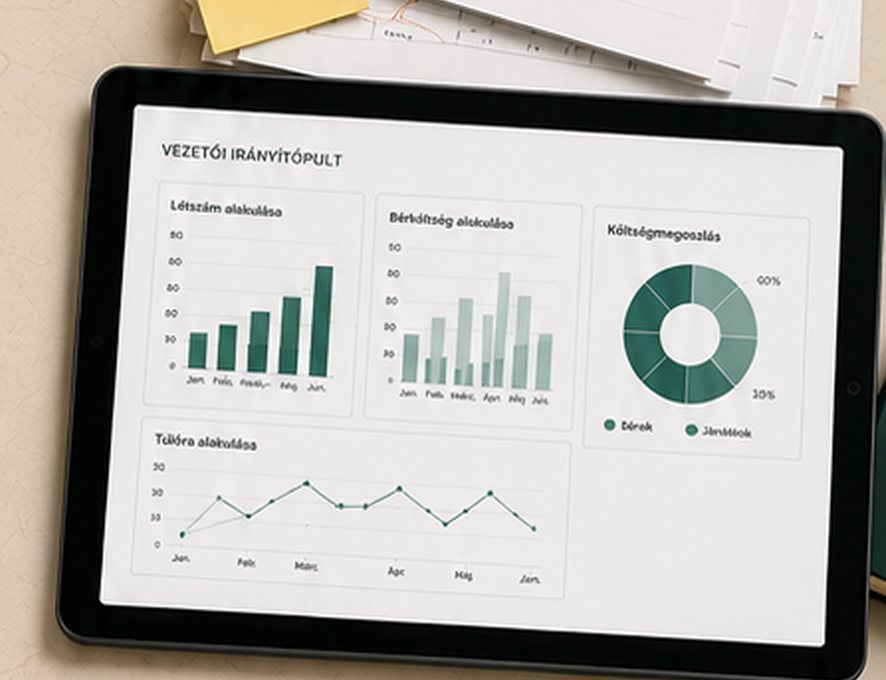
Controlling: numbers you can base a decision on
The monthly close is not the end point. The question is whether the numbers show in time that something has started to go in the wrong direction — and whether you know what to do about it.
What it is for, and what it is not
Controlling does not mean more spreadsheets. It means that management looks at the same few indicators every month, in the same breakdown, so that variance and trend can be interpreted against them.
At mid-sized scale the missing element is usually not the data but the structure: the data exists in the systems, it simply does not add up to a picture you can decide from.
What we provide
Regular financial reporting
Monthly collection and analysis of the key indicators, so that you always have an accurate picture of company performance.
Cost and unit-cost analysis
Detailed analysis of the cost structure and determination of the unit cost of products or services — the basis of pricing.
Cash-flow and liquidity management
Continuous monitoring and planning of cash movements, so that bottlenecks do not appear unexpectedly.
Strategic planning and analysis
Forecasts built on market and internal data, allowing you to react proactively to change.
Bespoke decision support
Beyond routine work we build bespoke financial models and decision-preparation materials. Typical cases:
Investment decision
A payback model for a new machine, a new production hall or a larger IT investment, with sensitivity analysis.
Pay-rise scenarios
What a given level of pay rise means for total payroll cost and cash flow, broken down by production unit.
Capacity and shift decisions
The full cost of starting a new shift — including premiums, lost time and turnover.
Restructuring
The financial effects of reshaping the company structure, with decision-preparation material for the ownership.
Frequently asked questions about controlling
Does it need separate software?
Not necessarily. At mid-sized scale the reporting structure can usually be built from data already in the accounting and payroll systems. We only recommend introducing a dedicated controlling system where it is genuinely needed.
How often do we receive reports?
Monthly as standard, in the days after the close. Alongside that, quarterly deeper analysis and ad-hoc decision-preparation material are usual. The rhythm follows your decision cycle, not the other way round.
Can we ask for controlling only, without accounting?
Yes, but it requires close cooperation with your existing accountant. The first step is clarifying in what breakdown the data is available — the quality of the report depends on that.
Related services
Accounting
Accounting is not good because it is ready on time — that is the baseline. It is good when the figures show what is…
DetailsPayroll
Full-scope payroll, from taking over attendance data to the bank transfer file and the statutory filings. At mid-sized…
DetailsCompany valuation
Whether you are preparing to sell, looking to buy, or simply want to know where you stand — a valuation is worth…
Details
Let's look at where your payroll stands today.
Thirty minutes is enough to tell whether a change is worth making at all. If it isn't, we'll say so.